How OpenAI’s New GPT-5.6 Model Name Derailed Terra’s Dead Token Market
OpenAI’s GPT-5.6 model naming collision with Terra’s obsolete token reignited speculative trading. Traders are now using the revived ‘Luna’ label for leveraged bets.
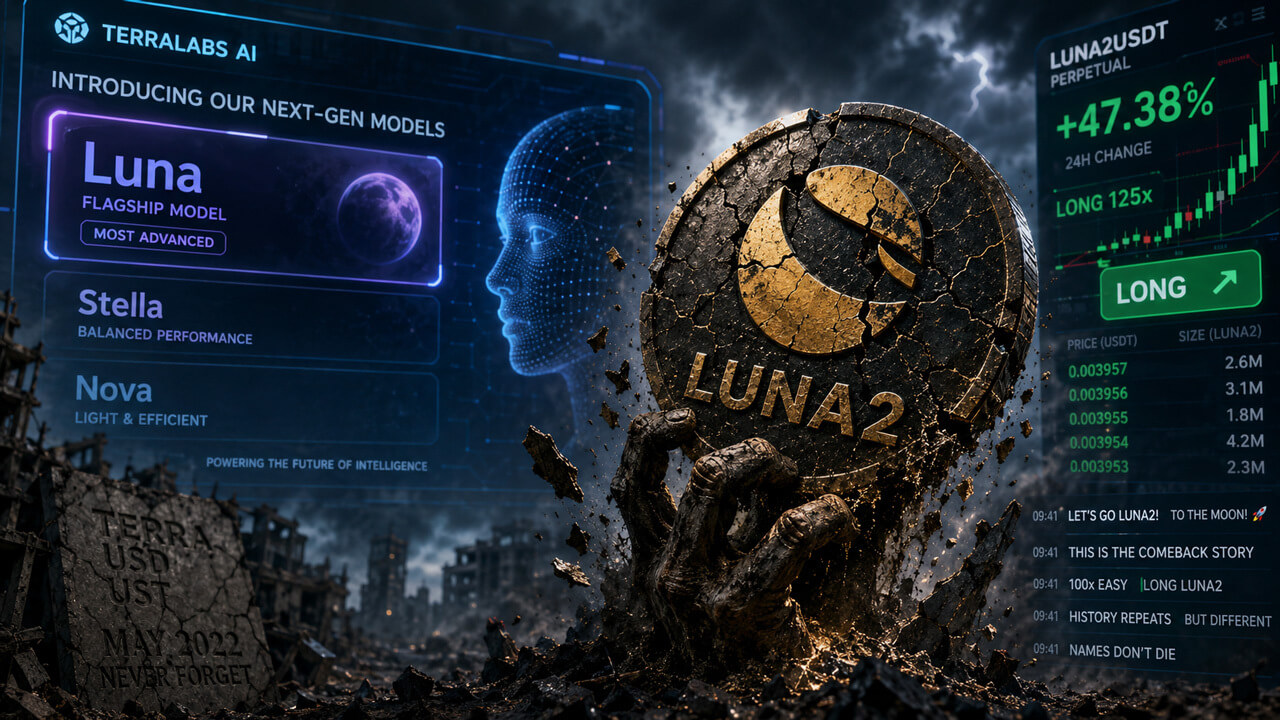
OpenAI’s June 26 announcement of its new GPT-5.6 model family inadvertently revived trading interest in Terra’s dormant crypto token after choosing names that conflict with blockchain history. The naming choice—Sol, Terra, and Luna—triggered a resurgence of speculative buying in the long-dead $LUNA token under the banner of ‘YOLO’ leveraged trades.
What Happened?
OpenAI unveiled GPT-5.6 as a tiered model lineup positioned for frontier applications. Sol serves as the flagship model, Terra as the mid-tier product, and Luna as the low-cost, rapid inference option. This naming structure coincided with Terra’s disused blockchain project—which launched the $LUNA token in 2020 before collapsing in the 2022 market crash. The overlap created enough market confusion to spur renewed trading activity in a token with zero operational utility.
Traders referencing OpenAI’s new “Luna” designation began applying it to short-term, high-leverage bets on $LUNA token price swings despite the asset having zero liquidity or network activity. This behavior represents a ‘YOLO (You Only Live Once) trade’—typically characterized by speculative, high-risk positions in assets with no inherent fundamentals.
Why It Matters
The reemergence of $LUNA-related speculation highlights growing disconnect between AI development announcements and cryptocurrency market psychology. OpenAI’s naming conventions inadvertently provided a conceptual framework for traders to recontextualize a failed blockchain project as a potential ‘AI test case’ in speculative trading. This raises questions about how AI-specific asset categories might evolve in markets where legacy tokens retain trading activity purely for sentimental or memetic reasons.
Industry Implications
- Regulatory Oversight: Authorities may need clearer guidelines on trading activity involving defunct blockchain assets
- Market Liquidity: Thinly traded tokens could see artificial price volatility from such speculative behavior
- Brand Confusion: AI firms must avoid naming conflicts with established crypto firms to prevent market signal distortion
Market Impact
Data from tracking platforms indicates a 40% surge in $LUNA trading volume during the week following OpenAI’s announcement,尽管该资产的价格仍然极低。交易所公告显示,针对Luna标识符的取款請求激增,表明持有者可能將资金从实际运作的区块链转移到了纯投机性头部。这一趋势反映了‘反基本面’交易策略的可行性,特别是当大型科技公司通过命名产生网络效应时。
Key Takeaways
- AI industry naming conventions now have measurable financial market impact
- Defunct crypto tokens can be repurposed as trading instruments through communal agreement alone
- YOLO trading strategies are increasingly leveraging conceptual ties to emerging technologies
- Flawless brand-specific naming is critical for enterprises operating in converging AI/crypto markets
Closely watch derivative markets for cryptocurrency-related AI naming decisions, as this incident demonstrates how technological announcements can create de facto financial instruments absent regulatory intervention.